

How Reliability Becomes A Competitive Moat Nobody Can Copy
Customers leave over outages, not features; turning uptime into a kept promise wins the deals price and features cannot.
Most founders compete on features. They build a faster onboarding, a slicker dashboard, one more integration, and they assume that is how they win. Features matter, but they have a quiet weakness: a competitor can copy them. The moment your clever feature lands, a well-funded rival can study it and ship their own version in a quarter. Feature parity is a treadmill, and on a treadmill nobody pulls ahead for long.
There is a different kind of advantage that competitors cannot copy by studying it, because it is not a thing you build once, it is a promise you keep continuously. It is reliability. Customers do not leave you because a competitor added a feature you lack. They leave you because your product was down when they needed it, and that is the thing price and features cannot rescue. Reliability is the moat that gets deeper the longer you maintain it, and it wins the deals that nothing else can.
Customers leave over outages, not feature gaps
The relationship between outages and churn is blunt. A single major outage at the wrong moment is enough to send a large share of your customers looking at the exit. It does not take a pattern of neglect or a year of decline. One bad window of unavailability, and trust that took years to build starts leaking.
Put that against the churn math. The average B2B SaaS churn rate sits around 3.5 percent, and the difference between a healthy company and a struggling one is often just a couple of points. A product that suffers outages is feeding the wrong side of that equation directly, because repeated downtime, slow performance, and data loss erode trust quickly, and customers who cannot depend on your product will find one they can. The trust you spent years building can be spent in a single afternoon of unavailability.
And the costs do not stop at the customers who leave. The slower-moving damage compounds: brand erosion, lost prospects who heard about the outage, the deals your sales team could not close because a reference customer mentioned the downtime. The visible cost of an outage is the revenue during the dark window. The real cost is everything that erodes for months afterward, which is why it pays to understand what an hour of downtime actually costs your business.
Reliability wins the deals price cannot
Here is the part founders underweight: reliability is not just a way to keep customers, it is a way to win them, especially the valuable ones. The bigger and more serious the customer, the more reliability matters relative to price, because for them downtime is not an inconvenience, it is their own revenue stopping. For many enterprises a single hour of unplanned downtime costs well over $300,000, and for a large share it crosses a million dollars an hour, the kind of figure that makes reliability pay back as an investment. A customer doing that math is not choosing a vendor on price. They are choosing the vendor they trust to stay up.
That is why a reputation for reliability wins deals that discounting cannot. When a serious buyer is comparing two products and one of them is known to be dependable while the other is cheaper but flaky, the dependable one wins the contracts that matter, the long ones with deep integration and high switching cost. Those are exactly the customers with the lowest churn, the ones who anchor your revenue. Reliability is how you attract them, and the integration depth they build then locks them in. The moat compounds: reliability brings the best customers, the best customers integrate deeply, and deep integration plus continued reliability makes them nearly impossible to dislodge.
Why a competitor cannot copy it
A feature is a snapshot. A competitor sees it and rebuilds it. Reliability is a track record, and a track record cannot be copied, only earned over time. Your three years of consistent uptime is not something a rival can ship next quarter. They have to live it, day after day, the same way you did, and every outage they suffer resets their clock while yours keeps running.
This is what makes reliability a true moat rather than a feature. It is built from accumulated trust, and trust is the one asset that takes time to build and only a moment to lose, which means it rewards the patient and punishes the careless. A competitor who wants to match your reliability reputation has to do the unglamorous engineering work, monitoring, automated recovery, careful deploys, real incident response, for years, with no shortcut. Increasingly that recovery work can run on its own, with AI site reliability cutting the on-call burden to near zero while a human stays in the loop for the dangerous calls. Most competitors will not do it, because it is not flashy and it does not demo well. That is precisely why it stays a moat.
Turning uptime into a promise you can keep
Reliability as a moat is not an accident or a matter of luck. It is the output of deliberate engineering, and the founders who treat it as a feature, something to invest in on purpose, are the ones who turn it into an advantage. The work is concrete.
It means deploys that cannot easily break production, with automatic rollback when a release fails its health check and the ability to ship updates with zero downtime, so a bad ship is a brief blip instead of an outage that waits for someone to notice. It means real monitoring that catches problems in seconds, not the hours it takes a customer to notice and email you, the payoff of structured logging that turns into alerts you trust. It means automated recovery for the routine failures, so a stuck service or a filling disk gets handled before it becomes downtime. And it means a genuine incident response capability for the rare hard failure, so that when something does go wrong, it is contained and resolved fast rather than spiraling, the same reason a founder should set reliability targets the whole company can agree on.
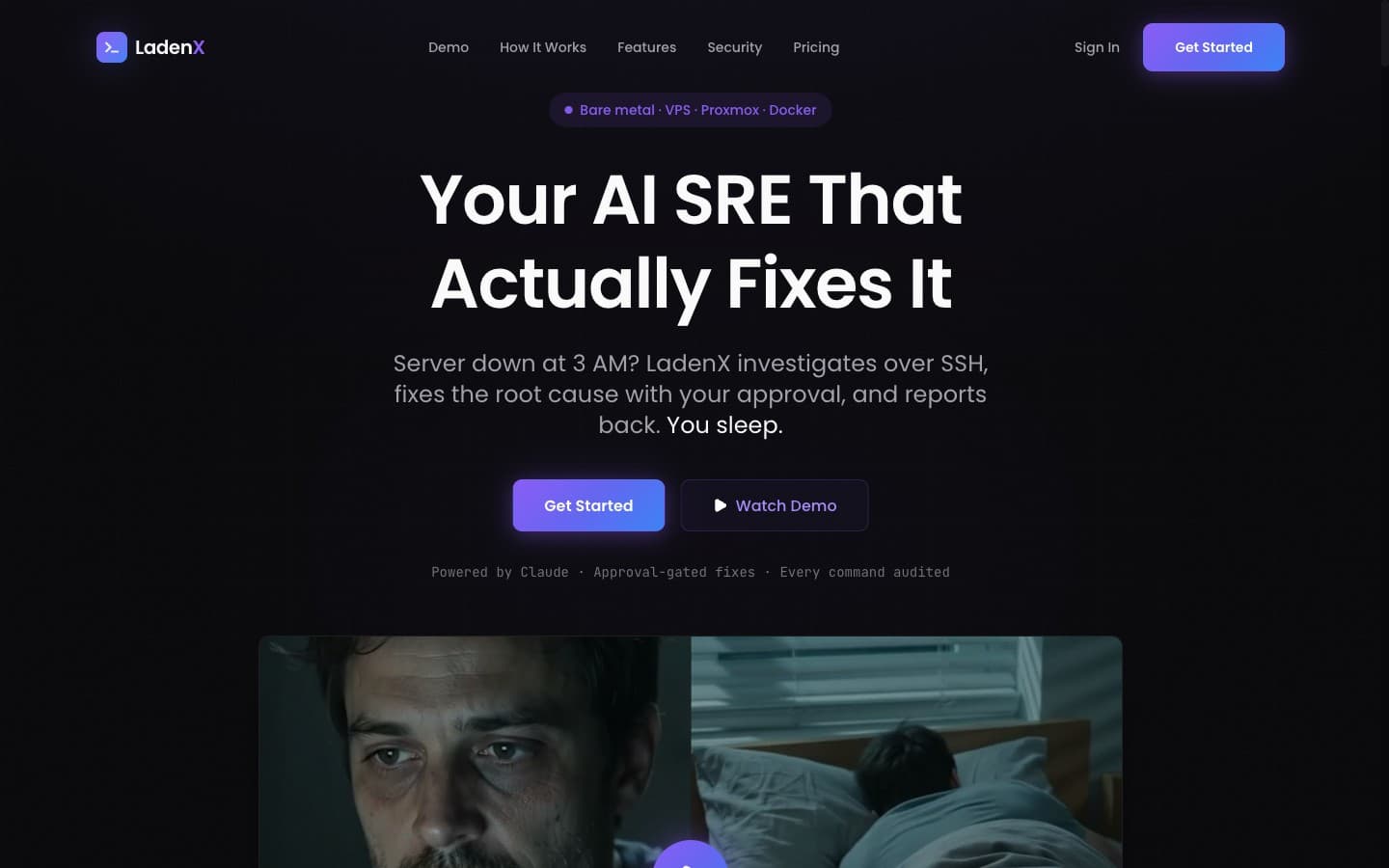
This is exactly the discipline we build into how we run servers and infrastructure, and it is the entire reason we built LadenX, our AI site-reliability engineer that watches systems around the clock, fixes the routine failures automatically, and refuses to touch anything destructive without a human in the loop. The goal of that work is not technical elegance for its own sake. It is to let a founder make a promise to their customers, we will be there when you need us, and actually keep it, day after day, until that kept promise becomes the reason the best customers will not leave.
Build the moat nobody can copy
Compete on features and you are on a treadmill where every advantage is temporary. Compete on reliability and you are building something that gets stronger the longer you hold it and that no competitor can shortcut. The customer who would consider leaving after one outage is the same customer who will stay for years with a vendor who never gives them a reason to look. Price gets you in the room. Features get you noticed. Reliability is what keeps the customers worth keeping and wins the deals worth winning, and it is the one advantage your competition cannot copy by watching you do it. Make uptime a promise, engineer it deliberately, and keep it, and you have a moat that deepens every day you do.